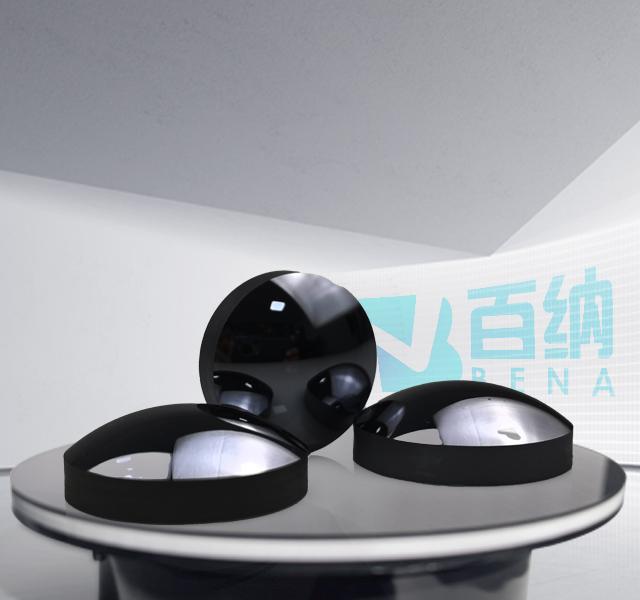
Elliptical mirrors are precision optical components designed to redirect and focus light between two specific focal points. Unlike conventional flat mirrors, elliptical mirrors use a curved reflective surface based on elliptical geometry, allowing light from one focus to be efficiently transferred to another focus.
In laser systems, imaging equipment and optical fiber applications, the performance of an elliptical mirror can directly influence light collection efficiency, beam focusing accuracy and overall system stability. Selecting the right mirror requires consideration of optical design, wavelength requirements, surface quality and application conditions.
This guide explains how elliptical mirrors work, where they are used, what specifications matter during selection and how engineers can evaluate optical components for demanding laser and photonics applications.
The unique characteristic of an elliptical mirror comes from the geometry of an ellipse. An ellipse has two focal points, and light emitted from one focal point can be reflected toward the second focal point when the mirror surface is accurately designed.
This optical property allows elliptical mirrors to efficiently collect, redirect and focus light in systems where precise energy transfer is required.
A typical working principle can be described as:
Light is generated or emitted from the first focal point.
The reflective elliptical surface redirects the light.
The reflected light converges at the second focal point.
Because of this controlled light transfer capability, elliptical mirrors are valuable in applications where accurate focusing and efficient optical coupling are important.
Laser systems often require precise control of beam direction, energy concentration and focal positioning. Elliptical mirrors can help optimize beam delivery by focusing or redirecting laser energy with high accuracy.
Compared with standard flat mirrors, elliptical mirrors provide additional focusing capability because their curved surface is designed to concentrate reflected light at a defined focal position.
In laser applications, elliptical mirrors may be used for:
Beam focusing and energy concentration
Laser source coupling
Optical path optimization
Light collection in high-precision systems
Integration into specialized photonics equipment
For engineers selecting an elliptical mirror for laser systems, the focal geometry, wavelength compatibility and surface accuracy should be evaluated together with the complete optical design.
The performance of an elliptical mirror depends not only on the reflective shape but also on several optical and manufacturing specifications. Choosing the correct specifications helps ensure stable performance after integration into the optical system.
The substrate material affects mechanical stability, thermal performance and optical reliability. Different applications may require different substrate options depending on operating conditions.
Surface accuracy influences how precisely light is reflected and focused. High-quality optical surfaces help reduce beam distortion and maintain consistent system performance.
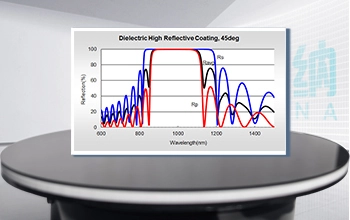
Reflective coatings should be selected according to the operating wavelength and application environment. Proper coating selection improves reflectivity and long-term durability.
The focal length, mirror size and focal point arrangement must match the optical system design. Incorrect dimensions can affect focusing performance and system alignment.
Different optical systems operate at different wavelengths. The mirror material and coating should be selected according to the required wavelength range.
Elliptical mirrors are used in various precision optical systems where efficient light transfer and accurate focusing are required.
In laser equipment, elliptical mirrors can support beam focusing, energy collection and optical path management, especially in systems requiring controlled light concentration.
Imaging systems may use elliptical mirrors for light collection and illumination management. Their focusing characteristics can help improve optical efficiency in compact optical designs.
Precision instruments often require reliable optical components for illumination, detection and signal collection. Elliptical mirrors can provide controlled light transmission paths in these systems.
In optical testing equipment, accurate light positioning is essential. Elliptical mirrors can assist with directing and concentrating light within measurement setups.
Optical fiber coupling requires efficient transfer of light between a source and a fiber interface. Small alignment errors or inefficient light collection can reduce system performance.
Elliptical mirrors can be used in fiber-related optical systems because they can collect light from one focal point and redirect it toward another defined position.
Common considerations for fiber coupling applications include:
Light collection efficiency
Focal point accuracy
Alignment requirements
Reflective coating performance
Compatibility with the optical wavelength
For optical equipment manufacturers, selecting an elliptical mirror requires balancing optical performance, mechanical integration and long-term reliability.
Many optical systems require customized mirrors because standard specifications may not match the required focal arrangement, dimensions or wavelength range.
Custom elliptical mirror development may involve:
Optical design review
Substrate selection
Precision surface processing
Reflective coating selection
Dimensional inspection
Optical performance testing
Working with an experienced optical manufacturer allows engineers to optimize mirror performance according to specific laser, imaging or photonics system requirements.
Bena Optics provides precision optical components for laser and photonics applications, supporting customers with different optical requirements and customized solutions.
An elliptical mirror is a curved optical reflector designed according to elliptical geometry. It uses two focal points to transfer and focus reflected light efficiently.
An elliptical mirror focuses light by reflecting rays from one focal point toward the second focal point through its precisely designed curved surface.
A flat mirror mainly redirects light, while an elliptical mirror is designed to collect and focus light between specific focal points.
Elliptical mirrors are commonly used in laser systems, optical fiber coupling, imaging equipment, microscopy, scientific instruments and light collection systems.
Selection should consider wavelength, focal length, mirror dimensions, coating requirements, surface accuracy and the specific optical system design.
Yes. Custom elliptical mirrors can be manufactured according to required optical parameters, dimensions, coatings and application requirements.